Showing posts with label Sunday of Great Judgement. Show all posts

Sunday, 23 February 2014

“The First Time He Came to Save the World; the Second He will Come to Judge it.” (Meat-Fare Sunday)

 Dionysios(+)

Nothing else in life is so certain as that we shall die. The fact that we were born and are in this world leads to the certainty that one day we will be leaving it. Every day we see and understand that people are born and that they die; some come, others go. But there’s another certainty: that we’ll be judged, in other words that we’ll give an account of the way we’ve led this life. This is a belief common to all, deeply-rooted in people of all nations and throughout all time. But we have “the prophetic word more certainly”; our Scriptures write about the great and manifest day of the judgement and Christ Jesus talks of His second coming, as we hear in the Gospel at the Divine Liturgy today. 

The Teaching of Gregory of Nyssa On the Eternality of Hell

By Metropolitan Hierotheos of Nafpaktos

In many of his texts St. Gregory speaks of man's freedom of choice, which is not abolished by God, and also about the perpetuity of Hell. Both these positions of his remove every notion of the theory of the restoration of all things as affirmed by Origen.

In his great catechetical oration, in which he refers to the Catechism and the value of Baptism, at the end he continues the subject of the change in a man's whole existence which comes about by his choice. He writes that holy Baptism is called birth from above, that is, it is man's rebirth and reconstitution, but it does not alter his characteristic features. This human nature does not of itself admit of any "change by Baptism", and neither is his reason or intelligence changed, nor his cognition nor any other characteristic of human nature. This must take place through man's struggle before and after Baptism. The grace of God which we receive through Baptism does not bring about our rebirth unless we ourselves play a part in it.

A Patristic Explanation of the Symbolic Imagery of the Coming Judgement

By His Eminence Metropolitan Hierotheos of Nafpaktos and Agiou Vlasiou

From the book Life After Death, Ch. 6: "The Coming Judgement".

The Second Coming of Christ and the resurrection of the dead are closely connected with the coming judgement, the so-called future tribunal. All men will stand before the dread judgement seat of Christ.

In the Creed we confess that Christ will come with glory “to judge the living and the dead.”

This conviction constitutes the central teaching of the Church, as we shall verify in what follows. In all the assemblies for worship and in the Divine Liturgy there are words about our presence before the throne of God. The priest prays:


“For a Christian end of our life, painless, peaceful and unashamed, and for a good answer before the dread judgement seat of Christ, let us pray to the Lord.”

Homily on the Eve of the Sunday of Dread Judgment

Metropolitan Philaret of Eastern American and New York (+1985)

When the Son of man shall come in His glory, and all the holy angels with Him, then shall He sit upon the throne of His glory: and before Him shall be gathered all nations, and He shall separate them one from another, as a shepherd divideth his sheep from the goats. And He shall set the sheep on His right hand, but the goats on the left. Then shall the King say unto them on His right hand, Come, ye blessed of My Father, inherit the kingdom prepared for you from the foundation of the world. For I was a-hungered, and ye gave Me meat: I was thirsty, and ye gave Me drink: I was a stranger, and ye took Me in: naked, and ye clothed Me: I was sick, and ye visited Me: I was in prison, and ye came unto Me. Then shall the righteous answer Him, saying, Lord, when saw we Thee a-hungered, and fed Thee? or thirsty, and gave Thee drink? When saw we Thee a stranger, and took Thee in? or naked, and clothed Thee? Or when saw we Thee sick, or in prison, and came unto Thee? And the King shall answer and say unto them, Verily I say unto you, inasmuch as ye have done it unto one of the least of these My brethren, ye have done it unto Me. Then shall He say also unto them on the left hand, Depart from Me, ye cursed, into everlasting fire, prepared for the devil and his angels. For I was a-hungered, and ye gave Me no meat: I was thirsty, and ye gave Me no drink. I was a stranger, and ye took Me not in: naked, and ye clothed Me not: sick, and in prison, and ye visited Me not. Then shall they also answer Him, saying, Lord when saw we Thee a-hungered, or athirst, or a stranger, or sick, or in prison, and did not minister unto Thee? Then shall He answer them, saying, Verily I say unto you, inasmuch as ye did it not to one of the least of these, ye did it not to Me. And these shall go away into everlasting punishment: but the righteous into life eternal (Matthew 25:31-46).

Saturday, 22 February 2014

THE DREAD JUDGMENT

St. John of Shanghai

Today Is The Sunday of the Dread Judgment, and it is natural for us to speak of the Dread Judgment and of the signs of the end of the world. No one knows that day; only God the Father knows; but the signs of its approach are given in the Gospel and in the Revelation [Apocalypse] of the holy Apostle John the Theologian. Revelation speaks of the events at the end of the world and of the Dread Judgment principally in images and in a concealed manner; but the Holy Fathers have explained it, and there is an authentic Church tradition that speaks to us both about the signs of the approach of the end of the world and about the Dread Judgment.

Before the end of life on earth there will be confusion, wars, civil strife, famine, and earthquakes. Men will suffer from fear; they will expire from the expectation of calamities. There will be no life, no joy of life, but a tormenting state of falling away from life. There will be a falling away not only from life, but from faith as well: when the Son of Man cometh, shall He find faith on the earth? (Luke 18:8).

Sunday of or of the Last Judgment

Bulgakov, Handbook for Church Servers 

The first name of this Sunday is explained by the fact that from it the permission to eat meat is ended (miasopustj=meat dismissal, or the discontinuance of meat), and the second name comes from the Gospel reading about the future all-inclusive Dread Judgment of the living and departed, which is described in all church services. By the commemoration of the Dread Judgment the Holy Church more strongly prompts the sinners to repentance and points out the true meaning of hope in the mercy of God. God is merciful but at the same time He is the Righteous Judge, having to render to everyone according to his deeds; therefore sinners should not be mistaken concerning their responsibility for their moral condition and abuse of the long-suffering God.

Saturday of the Dead

The day before the Sunday of the Last Judgement marks a commemoration of all those who have departed this life and Gone to their rest. This is the first of four such Saturdays 'of the dead' that occur during the annual Lenten discipline, and its position directly before the commemoration of the Last Judgement reminds us that all humankind, not only ourselves and those to come, but all those who have gone before us from the first moment of creation, will be called to account on the day of the great reckoning. Knowing that we live in a world filled with the consequences of human sin, the Saturday of the Dead is dedicated to praying on behalf of the members of this great human 'family' who now lie asleep in the Lord yet who continue to form an important part of our communal history of salvation. 

Saturday of the Dead


The day before the Sunday of the Last Judgement marks a commemoration of all those who have departed this life and Gone to their rest. This is the first of four such Saturdays 'of the dead' that occur during the annual Lenten discipline, and its position directly before the commemoration of the Last Judgement reminds us that all humankind, not only ourselves and those to come, but all those who have gone before us from the first moment of creation, will be called to account on the day of the great reckoning. Knowing that we live in a world filled with the consequences of human sin, the Saturday of the Dead is dedicated to praying on behalf of the members of this great human 'family' who now lie asleep in the Lord yet who continue to form an important part of our communal history of salvation. 

The texts below are taken from the hymnography for the Saturday of the Dead, found in the Lenten Triodion. 

The Third Sunday Of The Triodion Period: Sunday Of The Last Judgement (Meatfare Sunday)

Introduction

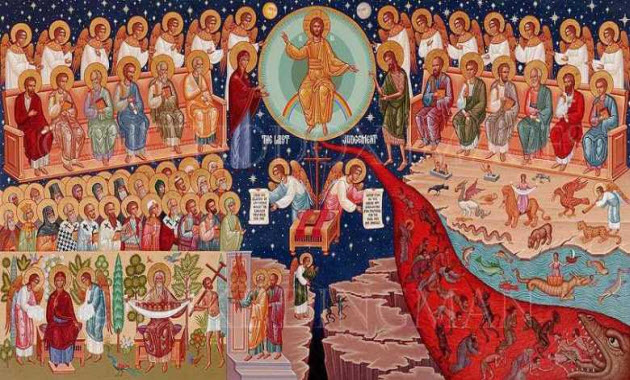
The Sunday of the Last Judgment is the third Sunday of a three-week period prior to the commencement of Great Lent. During this time, the services of the Church have begun to include hymns from the Triodion, a liturgical book that contains the services from the Sunday of the Publican and the Pharisee, the tenth before Pascha (Easter), through Great and Holy Saturday. On this day, focus is placed on the future judgment of all persons who will stand before the throne of God when Christ returns in His glory.
Biblical Story

The commemoration for this Sunday is taken from the parable of our Lord Jesus Christ concerning his Second Coming and the Last Judgment of all, both the living and the dead. In Matthew 25:31-46, Christ speaks about what will happen at this specific point in time when He will “come in His glory, and all the holy angels with Him” (v. 31).

Services of the Triodion for the Sunday of the Last Judgement

On the Last Judgment

St. Augustine 

From City of God 

Intending to speak, in dependence on God’s grace, of the day of His final judgment, and to affirm it against the ungodly and incredulous, we must first of all lay, as it were, in the foundation of the edifice the divine declarations. Those persons who do not believe such declarations do their best to oppose to them false and illusive sophisms of their own, either contending that what is adduced from Scripture has another meaning, or altogether denying that it is an utterance of God’s. For I suppose no man who understands what is written, and believes it to be communicated by the supreme and true God through holy men, refuses to yield and consent to these declarations, whether he orally confesses his consent, or is from some evil influence ashamed or afraid to do so; or even, with an opinionativeness closely resembling madness, makes strenuous efforts to defend what he knows and believes to be false against what he knows and believes to be true. 

Reflections on the Christian Fear of God

Sunday of the Last Judgement

When Thou shalt come, O righteous Judge, to execute just judgment, seated on Thy throne of glory, a river of fire will draw all men amazed before Thy judgment-seat; the powers of heaven will stand beside Thee, and in fear mankind will be judged according to the deeds that each has done. Then spare us, Christ, in Thy compassion, with faith we entreat Thee, and count us worthy of Thy blessings with those that are saved. Vesperal Sticheron from the Triodion 

O dread is that terrible day in which the just judgment of the Lord shall come. Quick shall be its coming, at a time unknown, and quick shall be its might. No ear shall be spared the trumpets' resounding call to the divine Tribunal, nor shall any earthly strength be fit to withstand it. 

Why Do We Fear the Dread Judgment?

Metropolitan Anthony (Khrapotvitsky) of Kiev and Galicia (+1936)

When the Son of man shall come in His glory, and all the holy angels with Him, then shall He sit upon the throne of His glory: and before Him shall be gathered all nations, and He shall separate them one from another, as a shepherd divideth his sheep from the goats. And He shall set the sheep on His right hand, but the goats on the left. Then shall the King say unto them on His right hand, Come, ye blessed of My Father, inherit the kingdom prepared for you from the foundation of the world. For I was a-hungered, and ye gave Me meat: I was thirsty, and ye gave Me drink: I was a stranger, and ye took Me in: naked, and ye clothed Me: I was sick, and ye visited Me: I was in prison, and ye came unto Me. Then shall the righteous answer Him, saying, Lord, when saw we Thee a-hungered, and fed Thee? or thirsty, and gave Thee drink? When saw we Thee a stranger, and took Thee in? or naked, and clothed Thee? Or when saw we Thee sick, or in prison, and came unto Thee? And the King shall answer and say unto them, Verily I say unto you, inasmuch as ye have done it unto one of the least of these My brethren, ye have done it unto Me. Then shall He say also unto them on the left hand, Depart from Me, ye cursed, into everlasting fire, prepared for the devil and his angels. For I was a-hungered, and ye gave Me no meat: I was thirsty, and ye gave Me no drink. I was a stranger, and ye took Me not in: naked, and ye clothed Me not: sick, and in prison, and ye visited Me not. Then shall they also answer Him, saying, Lord when saw we Thee a-hungered, or athirst, or a stranger, or sick, or in prison, and did not minister unto Thee? Then shall He answer them, saying, Verily I say unto you, inasmuch as ye did it not to one of the least of these, ye did it not to Me. And these shall go away into everlasting punishment: but the righteous into life eternal (Matthew 25:31-46). 

When Thou Shalt Sit to Judge the World, Count Me Worthy to Sit at Thy Right Hand

On this day we commemorate the inexorable Second Coming of Christ. The holy fathers have ordained that it be observed after the second parable of the Prodigal Son, so that no one who has learned from it of God's love of for mankind will live in laziness, saying, "God loves mankind, and when I am separated from Him by sin, I will nevertheless be restored." This terrible Day of Judgment is now commemorated, so that through fear of death and the expectation of future torment, those who live in laziness may be encouraged to strive for the virtues, not only trusting in the love of God, but also realizing that He is the righteous Judge, who will judge all men according to their deeds. In other words, those souls who have passed over to the next life must undergo judgment. And this present feast is symbol of this, for it is presented now as a final celebration, just as it will be the last event after our death. For it behooves us to contemplate that as the beginning of the world and Adam's fall from Paradise are commemorated on the following Sunday, so this day is the end of all days and of the world itself. 

Thursday, 20 February 2014

Homily For Judgement Sunday

St John Chrysostom

(Homily LXXIX: 
Matthew 25: 31-41)

Unto this most delightful portion of Scripture, which we do not cease continually revolving, let us now listen with all earnestness and compunction, this wherewith His discourse ended, even as the last thing, reasonably; for great indeed was His regard for philanthropy and mercy. Wherefore in what precedes He had discoursed concerning this in a different way; and here now in some respects more clearly, and more earnestly, not setting forth two nor three nor five persons, but the whole world; although most assuredly the former places, which speak of two persons, meant not two persons, but two portions of mankind, one of them that disobey, the other of the obedient. But here He handleth the word more fearfully, and with fuller light. Wherefore neither doth He say, "The kingdom is likened," any more, but openly shows Himself, saying, "When the Son of Man shall come in His glory." For now is He come in dishonor, now in affronts and reproaches; but then shall He sit upon the throne of His glory. And continually doth He make mention of glory. For since the cross was near, a thing that seemed to be matter of reproach, for this cause He raises up the hearer; and brings before his sight the judgment seat, and setteth round him all the world. And not in this way only doth He make His discourse awful, but also by showing the Heavens opened.