
Showing posts with label Abba Dorotheos of Gaza. Show all posts
Showing posts with label Abba Dorotheos of Gaza. Show all posts
Sunday, 28 April 2013

Friday, 26 April 2013
THE EPISTLES OF ST. ABBA DOROTHEUS
1. Instructions to a brothewho has asked him about insensitivity and the growing cold of love.
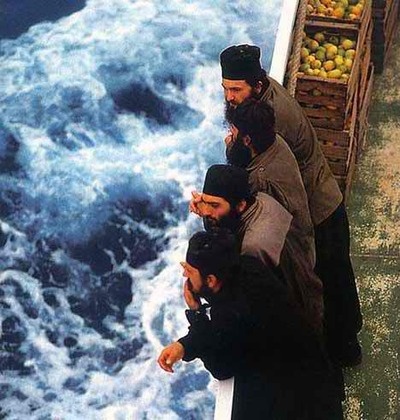 When your soul becomes insensitive, brother, it is useful to read the Holy Scriptures and the heart-touching words of the Holy and God-bearing Fathers, to remember God's Last Judgment, the departure of the soul from the body, and the terrible powers that can greet it, and with whose cooperation the soul committed evil acts in this brief and tormented life. It is also useful to remember how we shall appear before the terrible and righteous judgment seat of Christ, and not only for our deeds, but for words and thoughts shall we give an answer before God, before all His angels, and in general before all creation.
Nineteenth Instruction
Some brief instructions

Abba Dorotheos
 Abba Dorotheus said that one who trusts in his own understanding or judgment[1] cannot submit to nor follow the good example of his neighbor.
He likewise said: Being passionate, we cannot at all believe in our own hearts; for a crooked rule will make even the straight crooked.
He likewise said: It is not a great matter to withhold judgment of or to feel compassion for someone who is in sorrow and submits to you; but it is a great thing not to judge one who contradicts you, not to take revenge on him according to your passion, not to agree with those who condemn him, and to rejoice together with those who respect him.
Thursday, 25 April 2013
Eighteenth Instruction
To the brother who served as cellarer
Abba Dorotheos
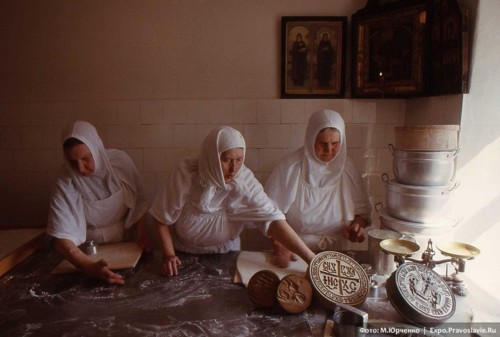 If you do not wish to fall into irritability and remembrance of evil, have no attachment whatever to things and do not be overly concerned for them, neither despise them as being of little importance or insignificance.When someone asks something of you, give it to him; and if he by chance, or by carelessness, should break or lose something, do not be grieved. You should act this way not out of carelessness for the monastery's things--for you are obliged with all your might and strength to be concerned for them--but rather out of the desire to preserve yourself from disturbance and quarrels, constantly showing to God your mighty striving. You can achieve this only when you will dispose of the monastery things not as your own property but as things which are offered to God and only entrusted to your care. For first you must be disposed not to have attachment to things, and secondly disposed not to despise them. If you will not have this in mind, then be convinced that you will not cease to be subject to disturbance, and you will disturb both yourself and others.
Tuesday, 23 April 2013
The Seventeenth Instruction
To those who are instructors in monasteries and to disciples: How one should instruct the brethren and how one should receive instruction
Abba Dorotheos
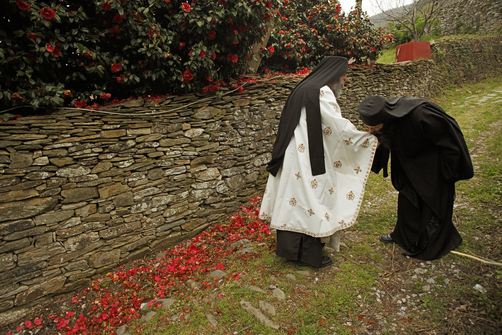 If you are a superior of brethren, take care of them with a contrite heart and a condescending mercy, instructing and training them in virtues by deed and word, but most of all by deed, because example is more effective than words. If you can, be for them also an example in bodily labors; but if you are infirm, then be an example of a good state of soul and of the fruits of the spirit enumerated by the Apostle: love, joy, peace, longsuffering, gentleness, goodness, faith meekness,
 Monday, 22 April 2013
SIXTEENTH INSTRUCTION
TO CERTAIN KELLIOTES
Abba Dorotheos
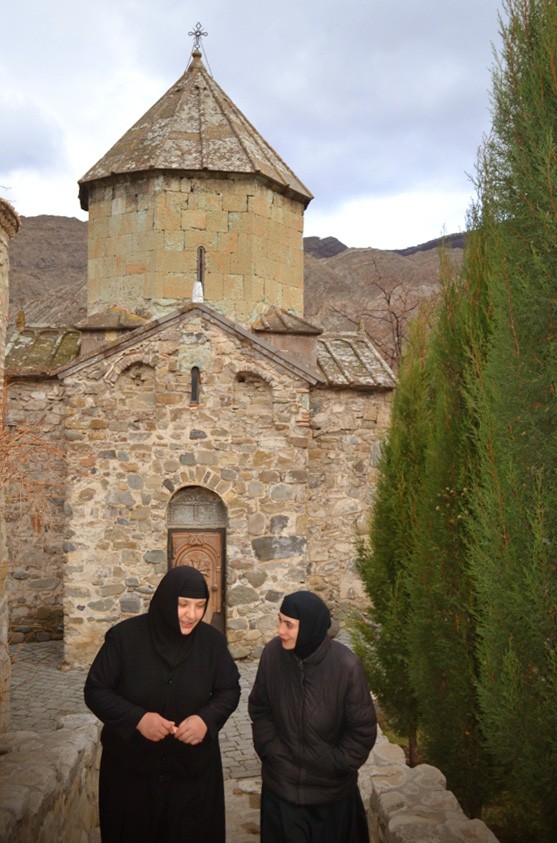
To certain kelliotes1 who asked St. Abba Dorotheos about visiting the Brethren
The Fathers say that half of spiritual life is to remain in the cell, and visiting the elders is the other half. This expression means that both inside the cell and outside the cell we must be equally heedful, and we must know why we should keep silence in the cell and why we should go to the fathers and brethren; for one who keeps sight of these aims strives to act as the Fathers teach. These aims are: when the monk remains in his cell he prays, studies the Holy Scriptures, he occupies himself with a little handiwork and according to his strength concerns himself with his thoughts. When he goes out somewhere he notices and examines his state of mind: does he receive benefit from meeting with the brethren or not? And can he return without harm to his cell? If he sees that he has suffered some harm, then he will thereby come to recognize his infirmity; he can see that he has not yet acquired anything from his hesychia, and, being humbled, he returns to his cell, repenting, weeping and praying to God over his infirmity. Thus he resumes abiding in his cell and being attentive to himself.
Sunday, 21 April 2013
THE FIFTEENTH INSTRUCTION
ON THE HOLY FORTY DAYS OF LENT

In the Law it is written that God commanded the sons of Israel to give a tenth part of all they had acquired during each year, and thereby bring a blessing upon all their deeds. With this in mind, the Holy Apostles established and committed to us as a help and benefaction for our souls something yet greater and more exalted--that we should set apart a tenth portion of the very days of our lives and devote them to God. Thereby might we also receive a blessing for all our deeds, and yearly cleanse the sins we have committed over the course of the whole year. Thus discerning, they have sanctified for us out of the 365 days of the year these seven weeks of Holy Great Lent. So they set apart these seven weeks; but later the Fathers deemed it wise to add yet another week: first of all, so that those wishing to initiate themselves in the ascesis of the fast over the course of this week might accustom themselves to it and prepare themselves for it; and secondly, in order to render honor to the number of days of the Great Fast which our Lord Jesus Christ fasted.
Thursday, 18 April 2013

Tuesday, 16 April 2013
THE THIRTEENTH INSTRUCTION
THAT ONE MUST BEAR TEMPTATION WITH THANKSGIVING AND WITHOUT DISTURBANCE
 |
THE TWELFTH INSTRUCTIONCONCERNING
THE FEAR OF FUTURE TORTURE AND THAT ONE WHO DESIRES TO BE SAVED SHOULD NEVER BE CARELESS OVER HIS SALVATION
Abba Dorotheos of Gaza
 |
| The torments of hell. Mosaic in Torcello, Italy. |
Saturday, 13 April 2013
THE ELEVENTH INSTRUCTION
THAT WE SHOULD STRIVE TO CUT OFF PASSIONS BEFORE THEY BECOME AN EVIL HABIT OF THE SOUL
 |
Friday, 12 April 2013
THE TENTH INSTRUCTION
THAT WE SHOULD TRAVERSE THE GODLY PATH WITH UNDERSTANDING AND HEEDFULNESS
 |
Thursday, 11 April 2013
THE NINTH INSTRUCTION
THAT ONE SHOULD NOT LIE
 |
Tuesday, 9 April 2013
THE EIGHTH INSTRUCTION
CONCERNING THE REMEMBRANCE OF WRONGS
 |
| Photo: Gennady Mikheyev. |
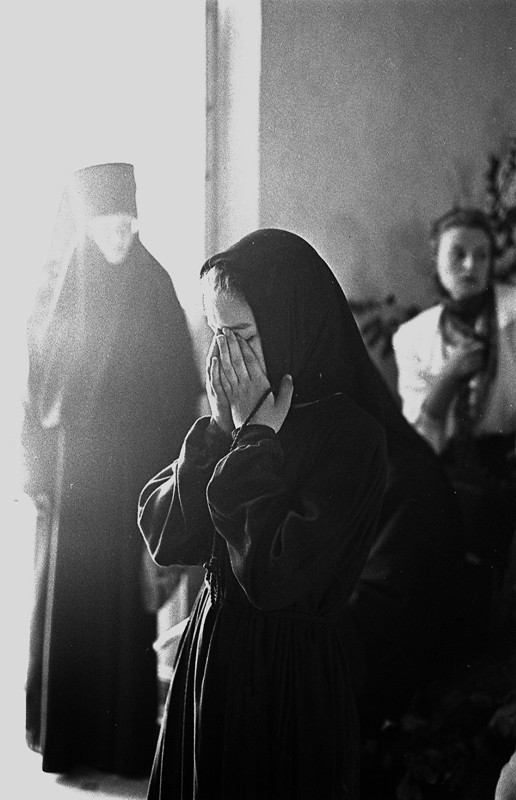
If a disturbance should occur among the brethren or dissatisfaction arises, and one of them bows down to the other begging forgiveness, but even after this he continues to grieve and to harbor thoughts against the brother. This brother should not underestimate this but rather cut it off quickly, for this is the remembrance of wrongs; and as I have said, it requires much heedfulness from a man so that he will not become hardened in it and perish. One who has bowed down begging forgiveness, for the sake of the commandment, has in the given moment healed anger, but he has not yet labored against the remembrance of wrongs, and therefore he continues to have a grievance against the brother. For the remembrance of wrongs is one thing, anger is another, yet another is irritability, and another is disturbance. So that you might better understand this I will give you an example.
INSTRUCTION SEVEN
HOW WE MUST ACCUSE OURSELVES,
AND NOT OUR NEIGHBORS
 |
Monday, 8 April 2013
THE SIXTH INSTRUCTION. THAT WE SHOULD NOT JUDGE OUR NEIGHBOR
If we would remember, O brethren, the words of the holy elders, if we would always study them, we would not so easily give ourselves over to carelessness over ourselves. For if, as they have said, we were not careless concerning small things and what seems to us insignificant, we would not fall into what is great and serious. I always say to you that from these insignificant sins, from the fact that we say, "What importance is there in this or in that," is formed in the soul an evil habit, and a man begins to be careless about great things. Do you know what a serious sin it is to judge one's neighbor? For what is more serious than this? What it is that God hates so much, what is so loathsome to him? As the fathers have also said, there is nothing worse than judging. However, a man comes to this great evil from such disregard for the seemingly insignificant. For, from allowing himself a slight disdain for his neighbor, from saying, "Of what importance is it if I listen to what this brother says?" or "What importance is it if I also say that or that word? Of what importance is it if I look to see what this brother will do, or that pilgrim?"—from these very things a person's mind begins to leave its own sins unattended and notice the sins of his neighbor. Later from this we come to judge, speak evil of and belittle our neighbors, and finally, we fall into the very same thing which we are judging. For because a man does not take care for his own sins and does not weep, as the Fathers have said, over his own dead man, he cannot prosper in anything good, but rather constantly turns his attention to the deeds of his neighbor. And nothing so angers God, nothing so deprives a man and leads him into the state of abandonment by God as spiteful talk, or judgment, or belittling of neighbor.
INSTRUCTION SEVEN. HOW WE MUST ACCUSE OURSELVES, AND NOT OUR NEIGHBORS
 |
Wednesday, 3 April 2013
Abba Dorotheos of Gaza
THE FOURTH INSTRUCTION.
CONCERNING THE FEAR OF GOD
St. John says in his Catholic epistle (I John 4:18) Perfect love casteth out fear. What does the Holy Apostle wish to say to us through this? What kind of love is he talking about, and what kind of fear? The Prophet David says in the Psalms (Ps. 33:10) Fear ye the Lord all ye His saints, and we find many other similar expressions in the Divine Scriptures. Thus, if even saints, who so loved the Lord, feared Him, then how is it, as St. John says, that Perfect love casteth out fear? By this the Saint wishes to indicate to us that there are two kinds of fear: one initial and the other perfect—one fear is characteristic, so to speak, of those who are beginning to be pious, while the other fear is that of perfect saints, who have attained to the measure of perfect love. For example: he who fulfills the will of God because of fear of tortures, is, as was said, still a beginner; for he does not do good for the sake of good itself, but rather out of fear of punishment. Another one fulfills the will of God out of love for God, loving Him just in order to please Him; he knows what the essence of good consists in, he has understood what it means to be with God. He has true love, which the Saint calls perfect. And this love brings him to complete fear, for such a one fears God and fulfills the will of God not out of fear of punishment, not in order to escape tortures, but because having tasted the very sweetness of being with God, he fears falling away, he fears being deprived of it. This perfect fear, which is born from this love, banishes, casts out the original fear; and this is why the Apostle says: Perfect love casteth out fear.
 |
Saturday, 30 March 2013
Twenty-first Instruction of Abba Dorotheos

A Commentary on certain expressions of St. Gregory concerning the holy martyrs.
Abba Dorotheos
It is good, O brethren, to sing the words of the holy God-bearers, for they strive everywhere to instruct us in everything which leads to the enlightenment of our souls. From the words we sing on the feast day, we should always come to understand the meaning of the what is being commemorated, whether it be a feast of the Lord, of the holy martyrs, or of the holy Fathers; in a word no matter what saint or blessed commemoration it is. Thus we should sing with heedfulness and penetrate with our minds into the significance of the words of the Holy Fathers so that we might sing not only with our lips as is said in the Patericon, but that our heart also might sing together with them. From the first hymn of the feast we have learned as we are able something about Holy Pascha; let us look further and see what St. Gregory wishes to teach us about the holy martyrs. In the hymnody about them, taken from St. Gregory's words, we sing today, "Living sacrifices, rational whole-burnt offerings," and the rest. What does this mean "Living sacrifices?" Sacrificial is the name for everything which is consecrated as a sacrifice to God, as for example sheep, bulls and the like. But why are the Holy Martyrs called living sacrifices? Because a lamb which is offered in sacrifice is first slaughtered and dies and then is sliced in pieces and offered to God; while the holy martyrs, while still being alive, were cut into pieces, scraped, tortured and endured dismemberment. Sometimes the torturers cut off their hands, feet and tongues and gouged out their eyes; and they were scraped in the ribs to such an extent with iron that their very inward parts were visible. In all of this of which I speak the Saints endured while still alive, still having their souls within themselves, which is why they are living sacrifices. And why are they called "rational whole-burnt offerings?" Because sacrifice is one thing and whole-burnt offering another. Sometimes men offer in sacrifice not a whole lamb but only a rudimentary part, as is said in the Law: the right shoulder, the pancreas and both kidneys, and the like (Ex. 29:22). Those who offered these, the rudiments, called this a sacrifice, which is why such an offering in general is called sacrifice. A whole-burnt offering is the name given to an offering of a whole lamb or a whole bull or any other offering burned without any remnant as is said in the same Law: the head with the feet and inward parts, sometimes also with the stomach and in a word, everything is burned entirely, and this is called a whole-burnt offering. Thus the sons of Israel according to the Law offered sacrifices and whole-burnt offerings. These sacrifices and whole-burnt offerings were a pre-figuration of the souls who desire to be saved and to offer themselves as a sacrifice to God.
Subscribe to:
Comments (Atom)