Showing posts with label St. Ignatius Brianchaninov. Show all posts

Sunday, 1 March 2015

From a Homily on the Sunday of the Triumph of Orthodoxy

St. Ignatius (Brianchaninov)

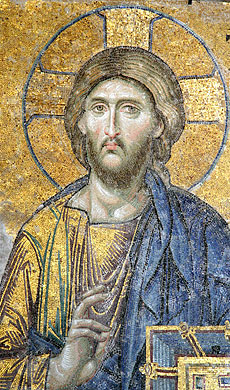
Christ the Pantocrator. Fresco in the Hagia Sophia, ConstantinopleOrthodoxy is the true knowledge of God and reverence of God. Orthodoxy is the worship of God in Spirit and in Truth. Orthodoxy is the glorification of the true God, the knowledge of Him and worship of Him. Orthodoxy is the glorification of God by man, the true servant of God, given to him through the grace of the Holy Spirit. The Spirit is the glory of the Christian (cf. Jn 7:39).[1] Where there is no Spirit, there is no Orthodoxy.

Tuesday, 27 January 2015

Homily on the Sunday of Zacchaeus

St. Ignatius (Brianchaninov) 

For the Son of man is come to seek and to save that which was lost (Lk. 19:10) 

Beloved brethren! These merciful words that we hear today in the Gospel are spoken by God become man about the sinner whom God’s righteous judgment had pronounced lost, but who was sought out by the power and grace of redemption, and numbered by it among the saved.

The sinner, Zacchaeus, was a publican with seniority over other publicans. He possessed significant wealth, as the Gospels relate, hinting about the way he obtained that wealth. “Publicans” were what they called tax collectors. It was tempting money! The sparkle of gold and silver charms the eyes of Adam’s descendants infected with sinfulness, and where money passes from hand to hand, abuse almost inevitably creeps in. Publicans were for the most part prone to extortion. When extortion becomes a passion it allows itself all manner of coercion and oppression against one’s neighbor. Then the passion of deceit and hypocrisy comes to the aid of the passion of extortion. From this combination comes the tendency towards captiousness, latching onto every trifle under the pretext of relentlessly fulfilling the laws, inventing guilt for the guiltless, exerting every effort to create an appearance of justness to conceal this inhuman oppression and cruelty against one’s neighbors. Because of this behavior publicans were horrible to the people, and held in contempt by moral people. Zacchaeus was a chief publican; his abuses were greater than those of his underlings. There is a reason why the Gospels point out that he was rich! He became rich unrighteously—his sin was extortion. His soul’s illness was filthy lucre and the mercilessness and lack of compassion that comes from it. Because of his serious sins and criminal disposition of soul, Zacchaeus was called “lost”. Not people’s light-minded, often mistaken condemnation called him lost—God Himself pronounced this judgment upon him. Zacchaeus had become a hardened sinner; in order to amass wealth through abuses one has to do so persistently and for a long time.

Thursday, 6 March 2014

THURSDAY IN THE FIRST WEEK OF GREAT LENT


Repentance is a sacrament by which those who confess


their sins are invisibly absolved of them by Jesus Christ Himself, at the priest’s visible expression of forgiveness.
Orthodox Catechesis

During the first week of Great Lent, all Orthodox Christians try to worthily prepare themselves for Communion of the Holy Mysteries of Christ. They first cleanse their souls in the sacrament of confession.

The Lord Jesus Christ said to His disciples,Verily I say unto you, Whatsoever ye shall bind on earth shall be bound in heaven: and whatsoever ye shall loose on earth shall be loosed in heaven (Mt. 18:18). And in another place, He breathed on them, and saith unto them, Receive ye the Holy Ghost: Whose soever sins ye remit, they are remitted unto them; and whose soever sins ye retain, they are retained (Jn. 20:21-23). Fulfilling the Lord’s will, the apostles in turn gave this authority to their successors—the pastors of Christ’s Church, and to this day, all the right-believing Christians who sincerely confess their sins before an Orthodox priest can receive through him the prayer of absolution, forgiveness, and complete remission of sins.

Saturday, 15 February 2014

Instruction on the Sunday of the Prodigal Son. On Repentance

St. Ignatius (Brianchaninov)

Beloved brethren! The Holy Church, the loving mother of all her children, who gave them birth unto salvation, and takes upon herself all care to ensure that her children not lose their inheritance—Heaven, preparing them for the successful completion of the forthcoming podvig of the Forty Days Fast, has ordained that we read today at the Divine Liturgy the parable of our Lord Jesus Christ about the prodigal son. 

In what does the podvig of the holy Forty Days Fast consist? In the podvig of repentance. During these days, we stand before the time dedicated largely to repentance, as before the doors of repentance, and sing the song that is filled with contrite feeling: Open unto me the doors of repentance, O Giver of life! What does our Lord’s Gospel parable that we hear today reveal to us? It reveals the unfathomable, infinite mercy of our Heavenly Father for sinners who bring forth repentance. The Lord made it known to people, calling them to repentance: Likewise, I say unto you, there is joy in the presence of the angels of God over one sinner that repenteth (Lk. 15:10). So that His words would become even more strongly impressed in the hearts of His listeners, He decided to supplement them with a parable. 

Saturday, 8 February 2014

Homily on the Sunday of the Publican and the Pharisee.

St. Ignatius (Brianchaninov)

On Prayer and Repentance

Translated by Nun Cornelia (Rees)

In today's Gospel, the prayer of the publican is shown drawing God’s mercy to him. This prayer consisted of the following words: God be merciful to me a sinner (Lk. 18:13). It is worthy of our attention that God heard such a short prayer, and that it was pronounced in the temple, during the common worship services, during the reading and chanting of psalms and other prayers. This prayer is commended in the Gospels; it is set forth as an example of prayer, and it becomes our sacred duty to piously contemplate it.

Friday, 3 May 2013

HOMILY ON GREAT FRIDAY, 

GIVEN AT THE EVENING SERVICE


St. Ignatius Brianchaninov
The Crucifixion. Fresco by Dm. Mironenko.
And all the people that came together to that sight, beholding the things which were done, smote their breasts, and returned
 (Lk. 23:48).

Thursday, 2 May 2013


FROM A HOMILY ON GREAT THURSDAY
 THE HOLY MYSTERIES OF CHRIST
St. Ignatius (Brianchaninov)

Bread strengtheneth man's heart (Ps. 103:17), the prophet foretold of a certain miraculous bread, which, unlike ordinary, material bread that strengthens the body, is to strengthen man's heart. Our heart is in need of strengthening! It was frightfully shaken when we fell, and cannot by itself stop wavering. It is continually shaken by various passions. Fallen man in his blindness preaches to no purpose and in vain about the firmness of human will. There is no firmness: it is drawn along by the force of the sins that overcome it. Needed, much needed is this prophesied, miraculous bread in order to strengthen the wavering, weakened heart of man.[1]

Saturday, 6 April 2013

A Rule of Self-Attentiveness For Those in the World
St. Ignatius (Brianchaninov)

Written in consequence of a certain pious layman’s desire to conduct an attentive life amidst the world. 

The soul of all exercises in the Lord isattention. Without attention, all these exercises are fruitless and dead. He who desires to be saved should arrange things in such a way that he can safeguard self-attentiveness not only in seclusion, but also among the very scatteredness into which he is sometimes drawn against his will. On the scales of the heart, let the fear of God prevail over all other feelings: then it will be easy to safeguard self-attentiveness, both in the silence of one’s cell and amid the noise surrounding one on all sides.

Prudent moderation in food, by reducing heat in the blood, contributes greatly toself-attentiveness; but inflammation of the blood – such as from excessive consumption of food, from increased physical movement, from the swelling of anger, from the flush of vainglory, or from other causes – generates a multitude of thoughts and fantasies, in other words, scatteredness. For those desiring to be attentive to themselves, the Holy Fathers prescribe, first of all, moderate, uniform, and continual abstinence in food (St. Philotheus of Sinai in The Philokalia).