Showing posts with label Archimandrite Tikhon (Shevkunov). Show all posts

Thursday, 2 May 2013


A SERMON ON GREAT THURSDAY
ON THANKFULNESS
Archimandrite Tikhon (Shevkunov)

In the name of the Father, the Son, and the Holy Spirit!

This day speaks to us about the difference between a person who is on the path to God, and the person who is on a path away from God. What is the difference between the bodiless spirit that we call an Angel, and the bodiless spirit that we call a demon? This day tells us of a great mystery, and one of the greatest keys to human existence. This mystery and key, as well as this difference between a demon and an Angel, between a servant and an enemy of God, can be found in only one word—in the Greek, "Eucharist," in [English], "thankfulness."

The soul that is capable of gratitude to God will be saved.

Tuesday, 16 April 2013


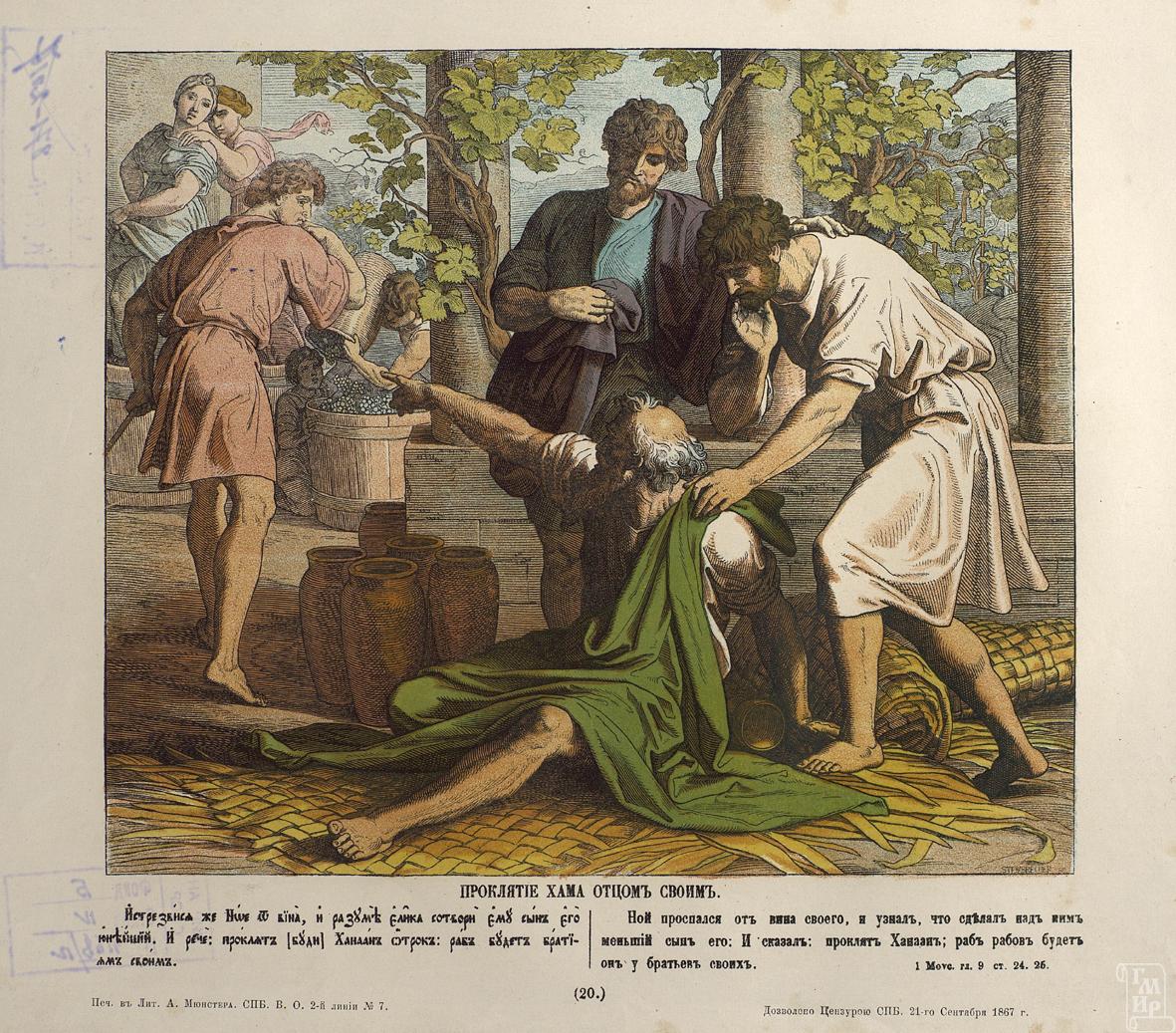
THE SIN OF HAM

A sermon given at the Liturgy of the Presanctified Gifts, 

Fourth Wednesday of Great Lent

In the name of the Father, the Son, and the Holy Spirit.
May God save you for these evening prayers, for preparing yourselves to receive Holy Communion, for your love of God and the Holy Church and for the Divine Liturgy—the highest, the most beautiful, immortal, common act of mankind, the only act that can truly unite people with God and with each other. At the Liturgy of the Presanctified Gifts we heard the readings from the Old Testament. We have all read them at one time or another, we are all familiar with them, and we know that this is the book in which the God-seer Moses tells the story of God’s creation of the world—not from his own mind, not as he imagined it, but as God put it into his mind. He tells us not only about these great works of God, but also about mankind’s first sins—about pride, about disobedience and betrayal of God, about the first murder, about enmity, and about envy. Now, today, before us at the Vespers, unfolds the story of yet one more sin, for which the Lord curses a man. This is the sin of Ham.

Saturday, 6 April 2013


Homily on the Sunday of the Veneration of the Cross


Archimandrite Tikhon (Shevkunov)
Translated for OrthoChristian.com

In the Name of the Father, and of the Son, and of the Holy Spirit!

Распятие. Московский Сретенский монастырь. <br>Фото: А.Поспелов / Православие.Ru
Распятие. Московский Сретенский монастырь.
Фото: А.Поспелов / Православие.Ru
The attitude in the Church of God towards the Lord’s Cross sometimes seems unusual and surprising to the world. And since we are in many ways sensual rather than spiritual, we too sometimes share this perplexity with the world. For example, why has the Cross been treated as a special, incomprehensible, but real living power in the Church’s Tradition for two thousand years already? Even now, during Great Lent, we daily pray the following during the divine services: “O Invincible and incomprehensible and divine power of the precious and life-giving Cross, forsake not us sinners.”
Moreover, the Church boldly asserts such astounding truths as these: “The Cross is the guardian of the whole world; the Cross is the beauty of the Church, the Cross is the might of kings; the Cross is the confirmation of the faithful, the Cross is the glory of angels and the wounding of demons.”
And yesterday, at the All-Night Vigil, we heard an astonishing hymn addressing and glorifying it: “Rejoice, life-giving Cross”—addressed the Church to the Cross as a kind of mystical person—“invincible victory of piety, door to Paradise, confirmation of the faithful, rampart set about the Church. Through thee the curse is utterly destroyed, the power of death is swallowed up, and we are raised from earth to heaven: invincible weapon, adversary of demons.” Perhaps this is all exaggeration and hyperbole?
What does it mean to “take up one’s cross and follow Christ”? We know that this is something very important, something that is no less than a necessary condition for the salvation of each of us. People ask: “But what does it mean to take up one’s cross?” How can we understand where this cross is? How can we take it up? How can we correctly choose our own cross, blessed by God, and not a contrived one that has nothing to do with our salvation?    
In fact, it is easy to understand the power of the Church’s words about the Holy Cross. One simply needs to grasp one truth.