Sunday, 28 February 2016

Sermon on the Sunday of the Prodigal Son

Georgios Patronos

Introduction

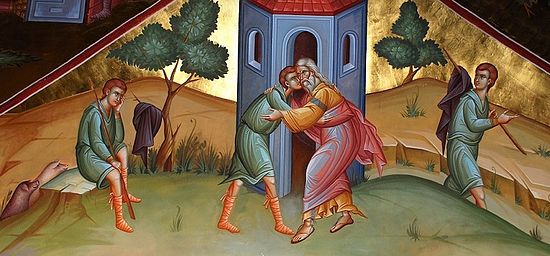
The parable of the Prodigal Son, which is the Gospel reading for today, is, as is well-known, one of the most beautiful texts of world literature.

It also recalls for us the Classical narrative, from Greek mythology, of the adventure of Odysseus who left Ithaca in order to become a man and wiser than before. This is to do with the eternal quest which people undertake, within time and history, leaving everything- certainty and security- to seek the unobtainable, the dream, and, in the end, made wiser by this experience of life, to return to their home and roots, where they eventually find rest.

How do we treat the gifts of God? The Sunday of the Prodigal Son


In the Name of the Father, the Son and the Holy Spirit.

How simple and how restrained are the words in which the Gospel describes his cruel rejection of his father, and prepares his departure into the far, strange country! “Father, give me my part of thy inheritance!” Do these words not mean: “Father, I can’t wait until your death! You are still strong, and I am young; it is now that I want to reap the fruits of thy life, of thy labors; later they will grow stale. Let us come to an agreement: for me you are dead; give me what belongs to me or what would belong to me after your actual death, and I will go, and I will live the life I have chosen.”

FASTING AND ORTHODOXY: LONGEVITY IN LIFE

Fr. Ted Bobosh

Sometimes we Orthodox need a little extra push to get into the Lenten Spirit.

I saw a few items in an article in the 22 February 2016 edition of TIME, “Longevity: It’s the Little Things That Keep Us Young” written by Alexandra Sifferlin which might help jump start our leap intoLent. Of course these aren’t the spiritual reasons we fast in the Orthodox Church, but maybe they can help convince us the benefits of Great Lent outweigh the risks. As we can see below there are several reasons why Great Lent may have long term benefits to our bodies and souls.

Sunday Themes for Great Lent

Fr. Ted Bobosh

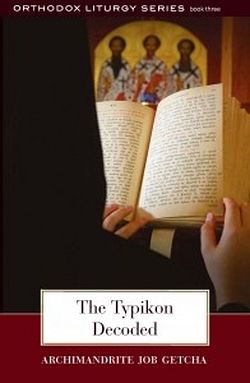
While there is a popular notion about the unchanging nature of Orthodox liturgical practices, any study of history shows that Orthodox liturgical practice has undergone numerous and significant changes over history. One area where we can note significant change is the themes assigned to the Sundays of Great Lent. The big change in Sunday lenten themes begins in the 12th Century when Sundays of preparation were introduced into the liturgical practice. This somewhat further lengthened the time of Great Lent and these additional pre-Lenten Sundays found their way into the Triodion, the Liturgical book guiding Great Lent. According to Archimandrite Job Getcha in his book, THE TYPICON DECODED (p 38),

THE GRATITUDE OF THE PUBLICAN

Metropolitan Anthony of Sourozh

 In the Name of the Father, the Son, and the Holy Spirit. How short, and how well known today’s parable, and yet, how intense its message, how challenging... It is intense in its very words: two men come into the church of God, into a sacred realm—which belongs to Him unreservedly in a world that is otherwise lost to Him. They enter His Divine Realm. And one of the men walks boldly into it and takes a stand before God. 

Tuesday, 26 May 2015

The Theology of Gender


Sofia Matzarioti-Kostara

1. The Story of Creation

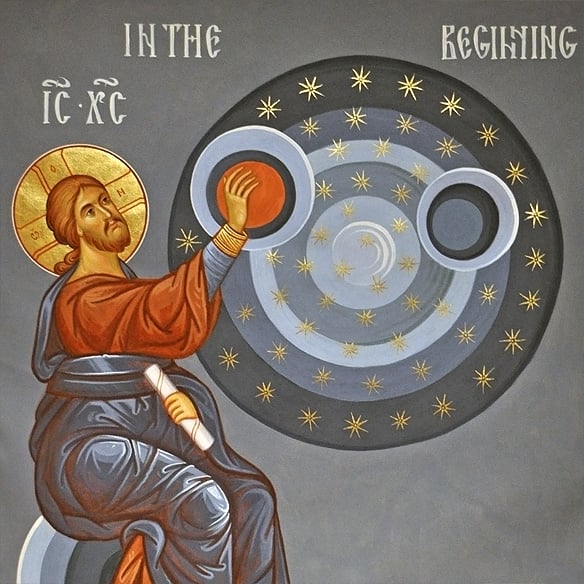
The story of creation presents the basic principles of human life and behavior. It is the main reference for the Christian understanding of humankind’s existential questions. In the book of Genesis, the unique relationship between humans and their Creator unfolds. Inside it, the mystery of the purpose of this world is hidden, as is the destiny of our existence.

Sunday, 19 April 2015

Comforting the Lord as He Weeps: On Palm Sunday

The Holy Gospel, my beloved brethren, says this in its account of the Lord’s Entry into Jerusalem: And when He was come near, He beheld the city, and wept over it (Luke 19:41).

People’s hearts are all the same. If someone is weeping, what do we do? We approach him, ask him what he is weeping about, and try to comfort him in some way. Sometimes one becomes so sorry for the person in distress that one feels ready to give up one’s soul, if only his grief would be made lighter. Let us now approach the Lord, too, and ask: “Lord, about what are You weeping?”

Monday, 13 April 2015


The Paschal homily
 of St John Chrysostomos
 (Archbishop of Constantinople)
This sermon is read at the Paschal Divine Liturgy on the Sunday of the Resurrection. 
It was written circa 400 AD

If any be a devout lover of God,
  let him partake with gladness from this fair and radiant feast.
If any be a faithful servant,
  let him enter rejoicing into the joy of his Lord.
If any have wearied himself with fasting,
  let him now enjoy his reward.
If any have laboured from the first hour,
  let him receive today his rightful due.
If any have come after the third,
  let him celebrate the feast with thankfulness.
If any have come after the sixth,
  let him not be in doubt, for he will suffer no loss.
If any have delayed until the ninth,
  let him not hesitate but draw near.
If any have arrived only at the eleventh,
  let him not be afraid because he comes so late.
For the Master is generous and accepts the last even as the first.
He gives rest to him who comes at the eleventh hour
  in the same was as him who has laboured from the first.
He accepts the deed, and commends the intention.
Enter then, all of you, into the joy of our Lord.
First and last, receive alike your reward.
Rich and poor, dance together.
You who fasted and you who have not fasted, rejoice together.
The table is fully laden: let all enjoy it.
The calf is fatted: let none go away hungry.
Let none lament his poverty;
  for the universal Kingdom is revealed.
Let none bewail his transgressions;
  for the light of forgiveness has risen from the tomb.
Let none fear death;
  for death of the Saviour has set us free.
He has destroyed death by undergoing death.
He has despoiled hell by descending into hell.
He vexed it even as it tasted of His flesh.
Isaiah foretold this when he cried:
Hell was filled with bitterness when it met Thee face to face below;
  filled with bitterness, for it was brought to nothing;
  filled with bitterness, for it was mocked;
  filled with bitterness, for it was overthrown;
  filled with bitterness, for it was put in chains.
Hell received a body, and encountered God. 
It received earth, and confronted heaven.

O death, where is your sting?
O hell, where is your victory?

Christ is risen! And you, o death, are annihilated!
Christ is risen! And the evil ones are cast down!
Christ is risen! And the angels rejoice!
Christ is risen! And life is liberated!
Christ is risen! And the tomb is emptied of its dead;
for Christ having risen from the dead,
is become the first-fruits of those who have fallen asleep.

To Him be Glory and Power, now and forever, and from all ages to all ages.

Amen!

Friday, 10 April 2015

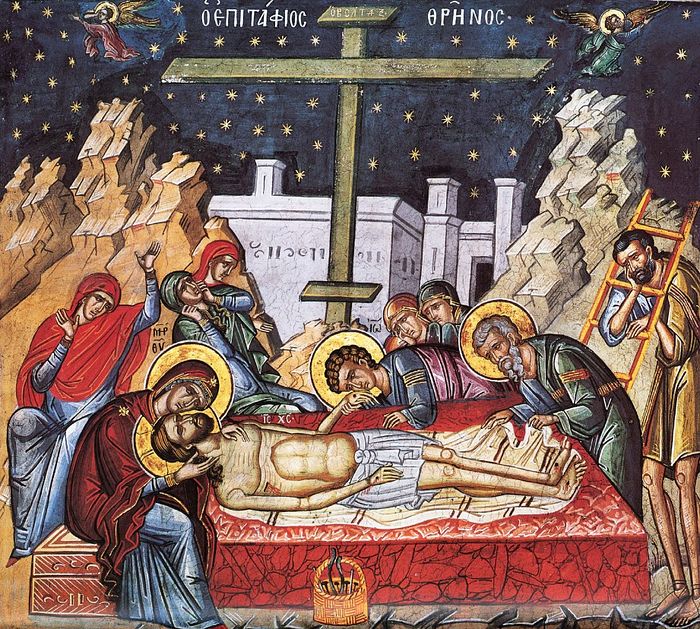
БЕСЕДА ПРЕД ПЛАШТАНИЦОМ

Add caption
Станимо добро, хришћани, станимо са страхом! Станимо са свештеним страхом у дому Бога нашег испред Спаситељевог гроба као испред отворене књиге.

Ево краја земаљског труда Сина Божијег, Који није учинио грех и Који ни за шта није био крив. Љубав према људима довела Га је с неба на земљу, а људска злоба Га је одвела на муке. Али он није само убијен, већ је прво осуђен, при чему је злочин заоденут у закон. И није једноставно погубљен, већ је злостављан и мучен, људи су Му се ругали и били су злуради, као да посредством својих дела објављују сродство с демонима.

The Cross as a Means of Sanctification and Transformation of the World

Fr. Dumitru Stăniloae

Through the Cross, Christ sanctified His body- the link with the world. He rejected the temptations sent to Him by the world, that is to taste the pleasures, to satisfy His needs unrestrained or to avoid pain and death. If we, in the same way, ward off the temptations of sin and patiently suffer the pain of death, sanctity can spread from His body to all bodies and throughout the world.