Showing posts with label The Great And Holy Lent. Show all posts

Sunday, 28 February 2016

FASTING AND ORTHODOXY: LONGEVITY IN LIFE

Fr. Ted Bobosh

Sometimes we Orthodox need a little extra push to get into the Lenten Spirit.

I saw a few items in an article in the 22 February 2016 edition of TIME, “Longevity: It’s the Little Things That Keep Us Young” written by Alexandra Sifferlin which might help jump start our leap intoLent. Of course these aren’t the spiritual reasons we fast in the Orthodox Church, but maybe they can help convince us the benefits of Great Lent outweigh the risks. As we can see below there are several reasons why Great Lent may have long term benefits to our bodies and souls.

Sunday Themes for Great Lent

Fr. Ted Bobosh

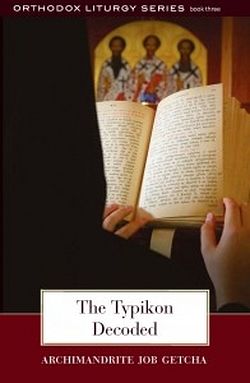
While there is a popular notion about the unchanging nature of Orthodox liturgical practices, any study of history shows that Orthodox liturgical practice has undergone numerous and significant changes over history. One area where we can note significant change is the themes assigned to the Sundays of Great Lent. The big change in Sunday lenten themes begins in the 12th Century when Sundays of preparation were introduced into the liturgical practice. This somewhat further lengthened the time of Great Lent and these additional pre-Lenten Sundays found their way into the Triodion, the Liturgical book guiding Great Lent. According to Archimandrite Job Getcha in his book, THE TYPICON DECODED (p 38),

Sunday, 21 April 2013

How to Live According to the Faith

Lessons of the Great Archpastor, the Ever-memorable
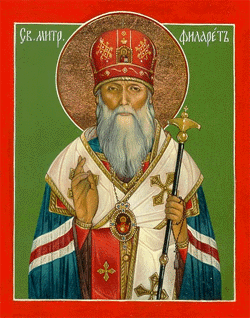
Metropolitan Philaret of Moscow
(November 19, 1867)

Faith in Christ has existed on earth for almost 2,000 years now, and is in no way overcome. Hundreds of thousands of people have joyously borne terrible torments out of love for Christ, for faith in Him. And if in present times there have appeared men of corrupt minds, reprobate concerning the faith (II Tim. 3:8) and stood against the Faith and the Church of Christ, all their efforts are in vain: the Lord said that the gates of hell shall not prevail against [His Church] (Matt. 6:18). Let us look at ourselves. Is there among us firm faith and love for Christ? Do we not stifle it with our passions, laziness, doubts? Ah, friends, without faith in the Lord Christ there is no salvation! We must by all means kindle in ourselves the spirit of faith, that is, stimulate it, feed it with prayer, the Word of God, patience, sincere remembrance of the Saviour Who suffered for us. All of this can be done every day.

Homily Seven - Another On Fasting

by Saint Gregory Palamas 

THE CALM SEA, RADIANT AND BRIGHT with sparkling light, reflecting the dawn on its smooth surface, is a pleasant sight to the eyes. But it is far more delightful not just to see but to address the church gathered together according to God's will, freed from disturbances, illuminated mysteriously by the divine light, stirred up towards that light's dawn, with hands and eyes, all the senses and the mind uplifted. The grace of the Spirit has today granted me this agreeable sight. You are all spending your nights and days together here in God's temple, and by your unceasing attendance upon Him you could be regarded as heavenly trees planted by the streams of the water of the Spirit. So may I now assist these streams as far as I am able. As you have offered your daytime prayers in addition to your early morning prayers, may we, as far as time allows, offer an evening sermon in addition to the one this morning, that we might show you openly all the different kinds of tricks to which the enemy of our salvation turns his hand to render not only our fasting but also our prayer worthless.

Thursday, 18 April 2013

FASTING ACCORDING TO THE SCRIPTURES


The spiritual discipline of fasting is something that has been part of the religious life of man since the very beginning. In the Paradise of Eden, the Lord commanded Adam: “From every tree that is in the paradise you may eat for food, but from the tree for knowing good and evil, you will not eat from it. And on whichever day you eat from it, you will surely die” (Gen. 2:16-17, LXX).
     When Adam broke the fast — eating of the tree before he was mature enough to handle it — the consequence was corruption unto death.     Through one man’s sin, death entered the world (cf. Rom. 5:12). While some fathers have speculated as to whether or not man was always intended to eventually partake of the tree, and die unto resurrection, what we know for sure is this: Adam was meant to abstain; he was meant to fast. He was meant to say “no” to his own desires, so the he could say “yes” to God. We don’t fast in order to “merit” anything from the Lord, but rather to become like God, imitating Christ in his 40-day struggle in the wilderness. And when Christ was tempted by Satan (as all those who are engaged in Christian fasting will experience), his reliance upon both prayer and the promises of God were enough to sustain him.