Tuesday, 17 March 2015

Homily 12

St. Macarius the Great

Concerning the state of Adam before he transgressed God's commandment, and after he had lost both his own image and the heavenly. The Homily contains some very profitable questions.

1. Adam, on transgressing the commandment, suffered a twofold disaster. He lost the pure and lovely possession of his nature, which was after the image and likeness of God; and he lost also that very image in which was laid up for him according to promise all the heavenly inheritance. Suppose there were a coin, bearing the image of the king, and it were stamped afresh with a wrong stamp; the gold is lost, and the image is of no value. Such was the disaster that befell Adam. Great riches and a great inheritance had been prepared for him. Suppose there were a great estate, and it had many sources of revenue in it; here a nourishing vineyard, there fruitful fields, there flocks and herds, there gold and silver; so valuable was the estate before the disobedience, the estate consisting in Adam's own vessel. But when he entertained evil intentions and thoughts, he was lost from God.

Sunday, 15 March 2015

The Cross, The Archpriest Christ’s Symbol of Redemption

The feast of the Veneration of the Cross is undoubtedly one of the greatest in Orthodoxy and is especially loved and honoured by members of the Church.

The focus of the feast- which the faithful are invited to venerate- is the Precious Cross, upon which Christ, after He had stretched out His holy palms, ‘united what had been divided’. God died in the flesh and, with His ultimate sacrifice, His love and submission, which culminated in the mystery of divine self-emptying, He atoned for sinful people before our holy God, satisfied divine justice for the sins and guilt of the whole world, redeemed His creation from the evil of the devil and the snare of death, pledging His most holy Blood as ransom. This blood was not that of an ordinary person, but of the Son of the Virgin and God. With His passion, He demolished the separating wall of hatred which had been created between people and God from the time when we were cast out from the ancient paradise of Eden because of our senseless disobedience. Through His death on the Cross, Christ dispelled the power of the devil, dealt death to death and opened wide the path which leads to the bright tabernacles of the heavenly kingdom. On the Cross of Christ, humankind once again became citizens of Paradise, we returned to our true home, mounted the real pedestal of our existence and cast off the threadbare tatters in which we were clothed by our senseless misdemeanour in Eden. […]

Saturday, 14 March 2015

Homily 11

St. Macarius the Great

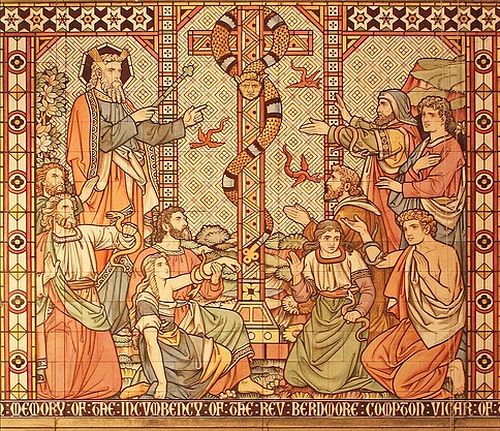
That the power of the Holy Ghost in man’s heart is like fire; and, what things we need, in order to distinguish the thoughts that spring up in the heart; and concerning the dead serpent fixed by Moses at the top of the pole, which was a type of Christ. The Homily contains two dialogues, one between Christ and the evil one, Satan; the other between sinners and the same.

Homily 9

St. Macarius the Great

By lowliness of mind and earnestness the gifts of the Divine grace are preserved, but by pride and sloth they are destroyed.

1. Souls that love truth and God, that long with much hope and faith to put on Christ completely, do not need so much to be put in remembrance by others, nor do they endure, even for a while, to be deprived of the heavenly desire and of passionate affection to the Lord; but being wholly and entirely nailed to the cross of Christ, they perceive in themselves day by day a sense of spiritual advance towards the spiritual Bridegroom.

Thursday, 12 March 2015

Homily 8

St. Macarius The Great

1. A man goes in to bend the knee, and his heart is filled with the divine influence, and his soul rejoices with the Lord, like bride with bridegroom, according to that word of the prophet Esaias which says, As the bridegroom rejoiceth over the bride, so shall the Lord rejoice over thee;1 and it comes to pass that being all day engaged he gives himself to prayer for an hour, and the inward man is rapt in prayer into the unfathomable deep of that other world in great sweetness, so that his whole mind is up aloft, rapt away thither, and estranged from things below. For the time being forgetfulness comes into him with regard to the interests of the earthly mind, because his thoughts are filled and taken captive to divine and heavenly things, to things infinite and past comprehension, to wonderful things which no human lips can express, so that for that hour he prays and says, "Would God that my soul might pass along with my prayer!"

Bearing the Shame of Confession..

Archimandrite Zacharias Zacharou 

Question: In taking the steps which you have presented to us, the most difficult thing, I think, is to overcome the fear of shame. This is what I try to do in my parish. People will not come to confession although their souls are burdened and things are driving them crazy, because they cannot overcome the shame to admit their sins. How do you lead people in this direction? 

Monday, 9 March 2015

ST. GREGORY PALAMAS AND THE TRADITION OF THE FATHERS

Archpriest George Florovsky

"Following the Holy Fathers" ... It was usual in the Ancient Church to introduce doctrinal statements by phrases like this. The Decree of Chalcedon opens precisely with these very words. The Seventh Ecumenical Council introduces its decision concerning the Holy Icons in a more elaborate way: "Following the Divinely inspired teaching of the Holy Fathers and the Tradition of the Catholic Church." The didaskalia of the Fathers is the formal and normative term of reference.

Homily 5

St. Macarius the Great. 

A great difference between Christians and the men of this world. Those who have the spirit of the world are in heart and mind bound in earthly bonds, but the others long after the love of the heavenly Father, having Him only before their eyes with much desire.

Homily 4

St. Macarius the Great 

Christians ought to accomplish their race in this world with heed and care, that they may gain heavenly praises from God and angels. 

1. We who wish to achieve the life of Christianity with any great thoroughness must before anything else cultivate with all our might that faculty of the soul which discerns and discriminates, in order that, having acquired a delicate sense of the difference between good and evil, and always distinguishing the things with which pure nature has been unnaturally adulterated, we may behave ourselves in a straightforward manner, without offence. By using this power of discernment as a kind of eye, we may keep free from any union or connection with the suggestions of sin, and thus the heavenly gift may be vouchsafed to us by which we become worthy of the Lord.

Sunday, 8 March 2015

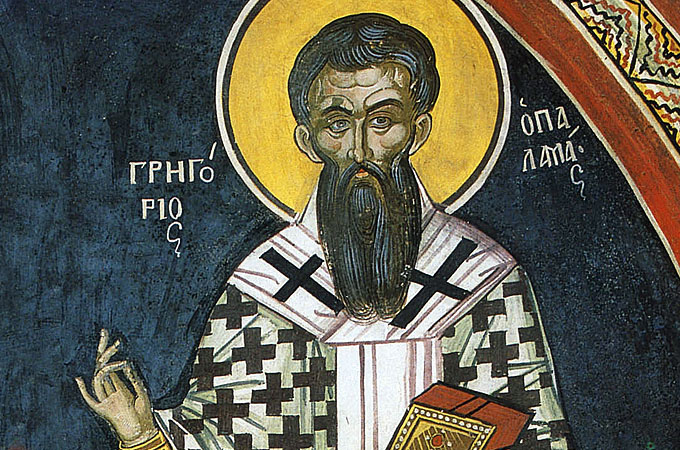
Saint Gregory Palamas and the Hesychasts (2nd Sunday in Lent)

The second Sunday in Lent is devoted to Saint Gregory Palamas (14th century), a hesychast from the Holy Mountain and later Archbishop of Thessaloniki.

Saint Gregory Palamas defended the hesychasts of the Holy Mountain who were being mocked and attacked by the person who expressed the spirit of the Western Church, the monk Barlaam, from Calabria in Southern Italy. When Saint Gregory defended these monks, he set out the Orthodox faith regarding God, the way we can approach Him and what it is that constitutes the salvation of humankind.